
Everything You Need to Know About TENCEL™ Lyocell
In the bedding world, material names are often used loosely, and it is not always clear what they actually mean. Fiber type, manufacturing process, and real-life performance can easily get blended together, making it harder to understand what you are truly buying.
This guide explains TENCEL™ Lyocell, in simple terms, what it is, where it comes from, and how it is made, so you can feel more confident about what you are choosing for your bed. You will also see how it is used in Orchids Lux Home collections and learn how to wash and care for it properly so it stays looking and feeling its best.
Table of Contents
What is TENCEL™ Lyocell?
TENCEL™ Lyocell are fibers made from natural raw material wood, used for textile applications. They are naturally soft and smooth to the touch and produced with a molecular marker.
This special identification technology ensures the authenticity and traceability of TENCEL™ fibers even after processing into textile products.
The word “Lyocell” refers to the manufacturing process and the generic name of the fiber itself. “TENCEL™” is the trademark for lyocell fibers produced by Lenzing AG.
TENCEL™ fibers certified with the EU Ecolabel have a reduced environmental impact across multiple stages of the product life cycle*.
*EU Ecolabel for textile products (license number: AT/016/001)

TENCEL™ Lyocell are fibers made from natural raw material wood, used for textile applications. They are naturally soft and smooth to the touch and produced with a molecular marker. This special identification technology ensures the authenticity and traceability of TENCEL™ fibers even after processing into textile products.
The word “Lyocell” refers to the manufacturing process and the generic name of the fiber itself. “TENCEL™” is the trademark for lyocell fibers produced by Lenzing AG.
TENCEL™ fibers certified with the EU Ecolabel have a reduced environmental impact across multiple stages of the product life cycle*.
*EU Ecolabel for textile products (license number: AT/016/001)
Where Does TENCEL™ Lyocell Come From?

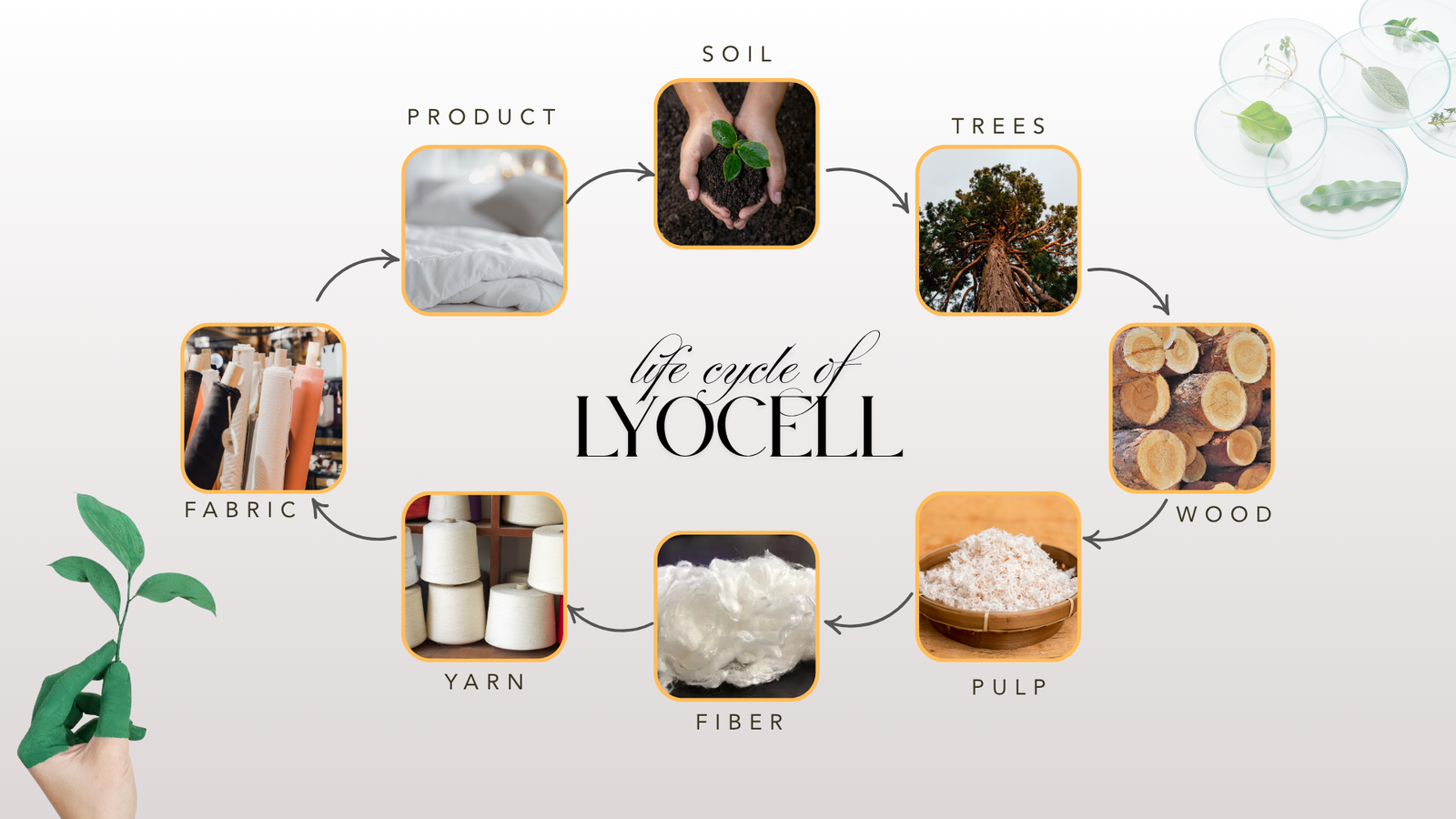
TENCEL™ Lyocell fibers are made from wood, a natural and renewable raw material carefully sourced from responsibly managed forests. The wood taken from nature is purposefully balanced with forest growth rates, to ensure the continued availability of this valuable resource.
For the production of TENCEL™ Lyocell fibers, wood is used for its high cellulose content. Timber from thinning or damaged wood can be used, so Lenzing is not in competition with other industries for high-quality wood.
For its highly responsible sourcing practices helping to protect ancient and endangered forests, Lenzing has been recognized as one of the best performing companies worldwide in Canopy’s Hot Button Report in 2023.
Where Does TENCEL™ Lyocell Come From?
TENCEL™ Lyocell fibers are made from wood, a natural and renewable raw material carefully sourced from responsibly managed forests. The wood taken from nature is purposefully balanced with forest growth rates, to ensure the continued availability of this valuable resource.
For the production of TENCEL™ Lyocell fibers, wood is used for its high cellulose content. Timber from thinning or damaged wood can be used, so Lenzing is not in competition with other industries for high-quality wood.
For its highly responsible sourcing practices helping to protect ancient and endangered forests, Lenzing has been recognized as one of the best performing companies worldwide in Canopy’s Hot Button Report in 2023.
How Is TENCEL™ Lyocell Manufactured?
How Is TENCEL™ Lyocell Manufactured?
Step 1: Preparing the cellulose
It all starts with harvested wood, which is processed into purified wood pulp. That pulp serves as the base material from which the fiber is made.
Step 2: Creating the solution
The pulp is dissolved into a smooth, uniform liquid solution that can be shaped into fibers.
Step 3: Forming the fiber
This solution is pushed through very fine openings called spinnerets, forming continuous filaments that solidify into TENCEL™ Lyocell fiber.
Step 4: Washing and drying
The newly formed fibers are washed to remove residual processing materials and then dried to stabilize their structure.

Step 5: Cutting into staple fibers
Depending on the final use, the continuous filaments may be cut into shorter staple fibers.
Step 6: Recovering the solvent
During production, the solvent used to dissolve the cellulose is captured, purified, and returned to the system, which reduces material loss.
Step 7: Converting into fabric
The stabilized fibers are spun into yarn and then woven or knitted into fabric for textile applications
Step 1: Preparing the cellulose
It all starts with harvested wood, which is processed into purified wood pulp. That pulp serves as the base material from which the fiber is made.
Step 2: Creating the solution
The pulp is dissolved into a smooth, uniform liquid solution that can be shaped into fibers.
Step 3: Forming the fiber
This solution is pushed through very fine openings called spinnerets, forming continuous filaments that solidify into TENCEL™ Lyocell fiber.
Step 4: Washing and drying
The newly formed fibers are washed to remove residual processing materials and then dried to stabilize their structure.
Step 5: Cutting into staple fibers
Depending on the final use, the continuous filaments may be cut into shorter staple fibers.
Step 6: Recovering the solvent
During production, the solvent used to dissolve the cellulose is captured, purified, and returned to the system, which reduces material loss.
Step 7: Converting into fabric
The stabilized fibers are spun into yarn and then woven or knitted into fabric for textile applications
What Are the Key Benefits of TENCEL™ Lyocell?
Comfort and Hygiene-Related Performance
 Supports a natural dry feeling through moisture control.
 Helps reduce the development of odor-causing bacteria.
 Naturally soft and smooth to the touch.
Sustainability and Material Responsibility
 Produced using REFIBRA™ technology, which incorporates recycled textile waste into new fibers.
 Manufactured with at least 50% lower carbon emissions and water consumption*.
 Derived from the natural raw material wood.
 Certified for biodegradability and compostability in various environments.
TENCEL™ Lyocell Bedding Collections by Orchids Lux Home
Now that you understand the fiber, here is how it translates into actual bedding you can use every day. Orchids Lux Home applies TENCEL™ Lyocell across select collections designed for comfort, versatility, and easy layering.
Merida Collection

Merida Lyocell 400TC Sateen Sheet Set (with pillowcases)
Your sheets are the first thing your skin touches every night, so feel matters. The Merida Sheet Set is made with 400 thread count sateen fabric made with TENCEL™ Lyocell fibers, offering a lightweight, smooth surface that feels clean and comfortable against the skin.
The look is simple and understated, which makes it easy to pair with almost any bedroom style. The set is available in Beige, Mist, Navy, and White, and is OEKO-TEX® STANDARD 100 certified.
Each Sheet Set includes a flat sheet, a fitted sheet, and pillowcases sized to the set. Pillowcases are also available separately.
Merida Lyocell 400TC Sateen Sheet Set (with pillowcases)
Your sheets are the first thing your skin touches every night, so feel matters. The Merida Sheet Set is made with 400 thread count sateen fabric made with TENCEL™ Lyocell fibers, offering a lightweight, smooth surface that feels clean and comfortable against the skin.
The look is simple and understated, which makes it easy to pair with almost any bedroom style. The set is available in Beige, Mist, Navy, and White, and is OEKO-TEX® STANDARD 100 certified.
Each Sheet Set includes a flat sheet, a fitted sheet, and pillowcases sized to the set. Pillowcases are also available separately.
Merida Lyocell 400TC Duvet Cover Set (with Shams)
If you like a coordinated bed with a polished finish, the Merida Duvet Cover set creates that complete look. Made with 400 thread count sateen fabric made with TENCEL™ Lyocell fibers, the solid reversible Duvet Cover and matching Shams work well on their own or layered with other textures. Available in Beige, Mist, and White, this set offers flexibility whether your style is minimal or layered. It is also OEKO-TEX® STANDARD 100 certified, adding an extra layer of assurance.
Merida Lyocell Diamond Quilted Coverlet (with Shams)
The Merida Coverlet is ideal when you want something lightweight but structured. Featuring a diamond-quilted design, it uses a 400 thread count sateen shell made with TENCEL™ Lyocell fibers and a cotton fiber fill, creating breathable layering that works across seasons. It can be used as a finishing layer or as a decorative accent to add depth to your bedding setup. Coordinating shams are available and sold separately, so you can style the look your way.
Merida Fabric Swatches
If you prefer to see and feel the fabric before committing, swatches are available to help you review the color and texture in your own space.
Porto Collection
Porto Lyocell 400TC Sateen Sheet Set (with Pillowcases)
The Porto Sheet Set is designed as a simple, reliable foundation for your bed. Made with 400 thread count sateen fabric made with TENCEL™ Lyocell fibers, it offers a lightweight and smooth feel that many people appreciate during warmer months or if they tend to sleep warm.
The set is OEKO-TEX® STANDARD 100 certified and comes in White/Beige, White/Mist, and White/Navy, giving you a clean base with subtle contrast.
Each set includes a flat sheet, a fitted sheet, and pillowcases sized to the set. Pillowcases are also available separately in Standard and King sizes.

Porto Fabric Swatch
Swatches are available for the Porto collection as well, making it easier to check the fabric and color combination before placing your order.
Porto Lyocell 400TC Sateen Sheet Set (with Pillowcases)
The Porto Sheet Set is designed as a simple, reliable foundation for your bed. Made with 400 thread count sateen fabric made with TENCEL™ Lyocell fibers, it offers a lightweight and smooth feel that many people appreciate during warmer months or if they tend to sleep warm.
The set is OEKO-TEX® STANDARD 100 certified and comes in White/Beige, White/Mist, and White/Navy, giving you a clean base with subtle contrast. Each set includes a flat sheet, a fitted sheet, and pillowcases sized to the set. Pillowcases are also available separately in Standard and King sizes.
Porto Fabric Swatch
Swatches are available for the Porto collection as well, making it easier to check the fabric and color combination before placing your order.
How Should You Wash TENCEL™ Lyocell Bedding?
Before you toss your TENCEL™ Lyocell bedding into the wash, take a quick look at the care label. Those instructions are specific to how your product was made and finished, so they should always come first. The tips below are general washing recommendations to help maintain the look and feel of bedding made with these fibers.
– Machine Wash in Cold Water: Cold water is your safest option. It helps reduce stress on the fibers and supports long-term fabric quality.
– Wash Separately: Try to wash your bedding on its own. Zippers, hooks, and rough trims from other items can cause snagging or friction over time.
– Use a Gentle Cycle: Choose a gentle or delicate setting. There is no need for long wash times or heavy spinning, which can put unnecessary strain on the fabric.
– Use a Mild Detergent: Stick with a mild detergent and make sure it is fully dissolved before washing. Avoid optical brighteners and skip fabric softener, as they can affect the fabric over time.
– Do Not Bleach: Bleach can weaken fibers and lead to discoloration. It is best to avoid it altogether.
– Tumble Dry Low or Line Dry Indoors: If you can, line dry indoors. If you prefer using a dryer, keep it on low heat with a low tumble setting.
– Remove Promptly: Take your bedding out as soon as the cycle finishes. This helps reduce wrinkles and prevents extra friction from sitting in the drum.
– Avoid Direct Sunlight: When air drying, choose a shaded and ventilated space. Direct sunlight over time can cause fading.
– Warm Iron if Needed: If you like a crisp finish, use a low to medium heat setting. Avoid high temperatures to help maintain fabric integrity.
– Dry Clean if Needed: Dry cleaning is an option if necessary. Always follow professional care instructions for the best results.
How to Maintain TENCEL™ Lyocell Bedding?
Washing is important, but long-term care goes beyond the laundry cycle. How you store, handle, and use your bedding also plays a role in maintaining its look and feel over time.
– Storage: When not in use, store bedding made with TENCEL™ Lyocell fibers in a cool, dry place. Keep it away from direct sunlight and excess heat.
– Stain Removal: Spills happen. If you notice a stain, try to treat it sooner rather than later. Instead of scrubbing hard, gently blot the area, soak if needed, and wash as recommended. Scrubbing can push the stain deeper into the fabric. The sooner you treat it, the easier it usually is to remove.
– Pilling: You may notice slight pilling at first, especially in areas that experience more friction. This is common with natural-fiber textiles and does not mean the fabric is defective. Following washing instructions and reducing friction, such as avoiding rough fabrics or abrasive contact, can help minimize pilling over time.
– Ironing: If you prefer a crisp look, you can use a warm iron on a low to medium setting. Steam can help release wrinkles. Avoid high heat, as excessive temperatures can affect the fabric’s surface and structure.
Conclusion
Now that you understand what TENCEL™ Lyocell is, where it comes from, and how it performs in bedding, choosing the right set becomes a lot less confusing. You can shop with more confidence and focus on what truly fits your comfort preferences.
If you are ready to experience it for yourself, explore the TENCEL™ Lyocell bedding collections at Orchids Lux Home and find the option that feels right for your space and your sleep.
FAQs
What is TENCEL™ Lyocell?
It is a regenerated cellulosic fiber produced from wood-based cellulose and identified by a registered trademark. It is used in textile applications that require controlled production standards and material consistency.
Is TENCEL™ Lyocell the same as lyocell?
Lyocell is the generic name of the fiber and manufacturing process. TENCEL™ Lyocell refers specifically to lyocell fibers produced under the TENCEL™ trademark and associated quality standards.
What raw material is used to make TENCEL™ Lyocell?
TENCEL™ Lyocell is derived from wood-based cellulose, commonly sourced from eucalyptus wood processed into pulp prior to fiber manufacturing.
Why is TENCEL™ Lyocell used in bedding?
TENCEL™ Lyocell is used in bedding because it provides a comfortable sleep surface that feels gentle against the skin and supports a cooler, drier sleep environment. It is also derived from wood-based cellulose and produced through a resource-conscious process, making it a more sustainable material choice.
How should TENCEL™ Lyocell bedding be washed?
Bedding made with TENCEL™ Lyocell fibers should be washed in cold water on a gentle cycle, using a mild detergent and avoiding bleach and fabric softener.